

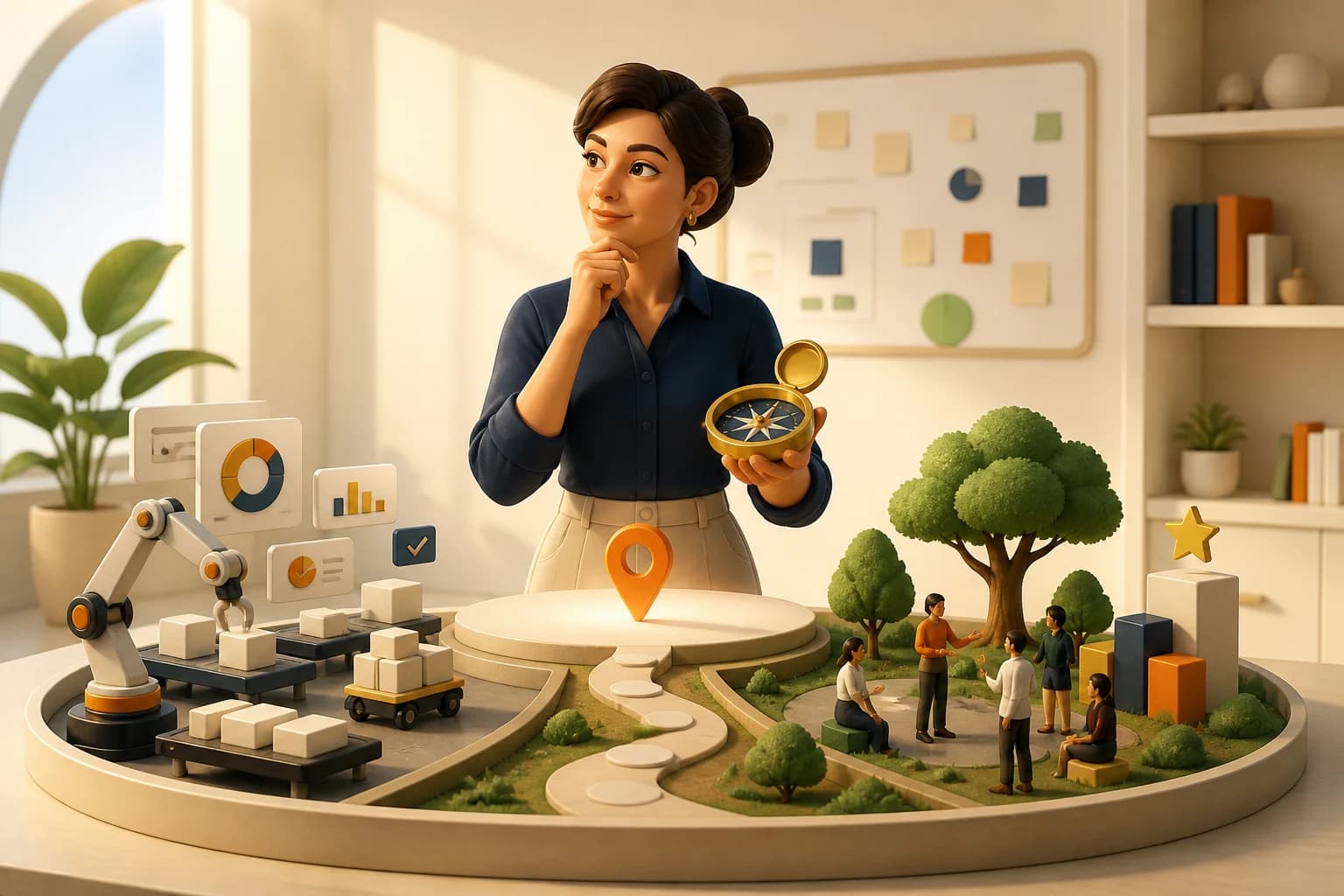
The honest version of this question is uncomfortable, so most answers to it are not honest. They arrive at creativity, empathy and human connection, which are pleasant and mostly untestable, and they skip the part where a lot of work people were paid well to do last year can now be produced in a minute by somebody who does not understand it.
A better way in is to ask what a person still supplies that the machine cannot, in the specific sense of the work not happening without them.
Machines produce output. People supply the reason there is output at all
Every generated artefact starts from a request. Somebody decided this was the thing worth making, for these people, at this moment, instead of the eleven other things competing for the same week. That decision is not a writing task and never was.
It is also the decision that no model can make for you, because it is not a question about language or code. It is a claim about the world: that this problem is real, that these are the people who have it, and that solving it is worth what it costs. The model has no access to any of that. It has access to what you told it.
This sounds abstract until you watch a team ship three well-executed things nobody wanted. The execution was not the failure. Nothing in the execution could have caught the failure.

Accountability cannot be delegated to a model, and that is a job
When a generated analysis turns out to be wrong, somebody has to answer for it. Not to apologise, but in the practical sense: to have anticipated that it might be wrong, to have checked the parts most likely to be, and to carry the consequence when it is.
You cannot put a model on that hook. It has no stake, it will not be there next quarter, and it will produce the next answer with exactly the same confidence as the one that failed. The accountability stays with a person whether or not that person did the typing.
This is why the roles that survive are rarely the ones that produce the most. They are the ones where somebody's name is on the outcome, and where that person had enough judgement to know which parts to distrust.
Knowing the answer is wrong is now the scarce skill
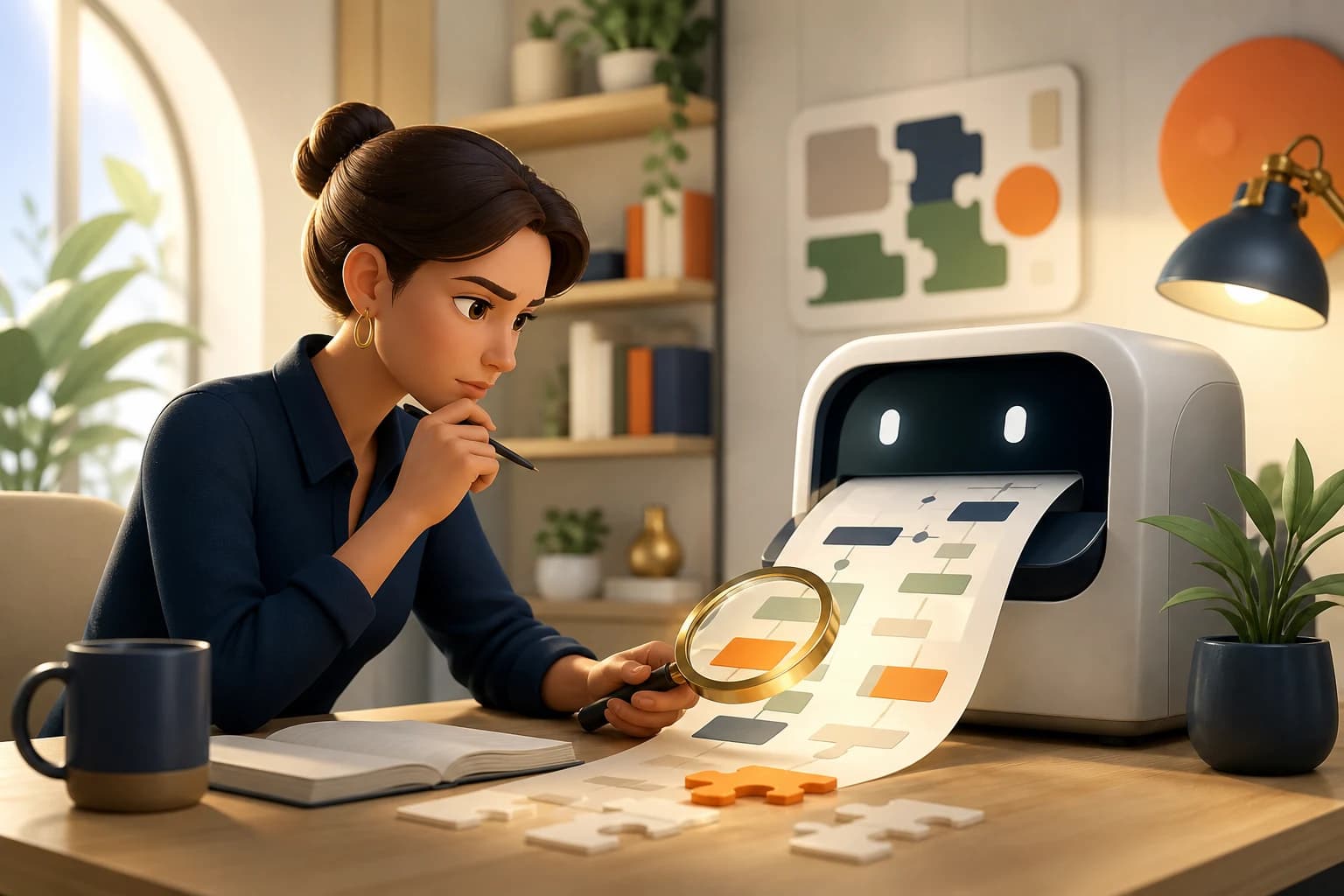
A model fails differently from a junior colleague. A junior gets stuck, says so, and asks. A model does not get stuck. It produces a fluent, structured, confident answer to a question it has misunderstood, and nothing on the surface of the output distinguishes that from a correct one.
Catching it requires knowing the domain well enough to feel the wrongness before you can articulate it. That feeling comes from having done the work, made the mistake, and watched the consequence, which is exactly the experience AI is now doing on people's behalf.
The uncomfortable implication is that this skill is getting scarcer at the same time it is getting more valuable, because the usual way to acquire it was to do the routine work that is now automated.
What this means for what you spend your time on
The advice that follows is not to stop using the tools. They are genuinely faster, the time saved is real, and refusing them is a way of being slower rather than a way of being valuable.
It is to notice which half of your job you are automating. If you are automating the production and keeping the judgement, you are getting more valuable. If you are automating the judgement and keeping the production, you have it backwards, and the market will notice before you do.
- Before generating anything, write down by hand what would have to be true for this to be worth doing. Fifteen minutes, no tool.
- Keep the parts where you decide, and hand over the parts where you transcribe.
- Deliberately do some work the slow way in the area you want to be senior in. That is not nostalgia, it is how the wrongness detector gets built.
- Judge your own output on whether the thing you claimed would be true turned out to be true, not on how quickly it was produced.